Getting hold of it is the easy half.
The reason no aggregator serves this region is not that the material is hard to find. It is that clearing it, documenting it, paying for it, cleaning it and normalising it into something a pipeline can ingest requires an operation on the ground. That operation is the product. The tape, the paper and the records are raw material.




Six stages, answered twice
Media and records go through the same six stages and almost none of the same work. Both answers are given at every stage, because a buyer evaluating us on one side of the house should be able to see exactly what happens on the other.
- 01
Source
Find who holds it and get into the room. Every line in this catalogue begins as a relationship rather than a download.
- Media
- Station managers, podcast networks, production houses and the event and commercial videographers who hold thirty years of ordinary life on tape — approached in person in Lagos, Ibadan, Douala and Yaoundé.
- Records & documents
- Institutions, professional firms and archive holders, approached with a written mandate naming exactly which records are wanted and what they are for. Nobody is asked to hand over data on the basis of an idea.
- 02
Clear
Reconstruct chain of title per asset and put a signed instrument behind it. This is the work, this is the cost, and this is why the material has never been licensed before.
- Media
- Production agreements read line by line, performers and contributors traced, third-party music and licensed inserts identified and removed, and a licence signed that names AI training in the grant and permits sublicensing onward through multiple tiers.
- Records & documents
- A data-sharing agreement with the holding institution, a de-identification schema agreed in writing before anything moves, and an NDPA 2023 assessment per tranche. Where a record class cannot clear, the tranche is declined rather than reduced.
- 03
Capture & digitise
Get it off the shelf and into one technical standard. Uniformity beats peak quality: a buyer's pipeline cares far more about every file being the same than about the best file in the set.
- Media
- Tape and film transferred at a fixed standard; originated capture runs locked identical settings across every operator — one resolution, one frame rate, one codec, no HDR — with a clap-synced second angle and lavalier audio on the subject.
- Records & documents
- 400 dpi colour scanning, deskewed, one page per image, TIFF master with a PDF/A compile. Structured records exported to a single schema with the data dictionary written alongside rather than reconstructed later.
- 04
Clean
The unglamorous half, and the half a buyer pays for without ever mentioning it in a meeting. Material arrives inconsistent. It leaves uniform, and every change made to it is written down.
- Media
- Deduplication, colour-bar and dead-air trimming, channel separation where the source allows, loudness normalisation to a stated target, corrupt-segment detection, and technical metadata extracted from the container rather than typed in by hand.
- Records & documents
- Deduplication, field normalisation, date and currency coercion, entity resolution across sources, and a null and outlier report shipped with the tranche. Every transformation applied is logged, so nothing about the delivered set is unexplained or unreproducible.
- 05
Annotate
The layer that turns cleared material into training data. To your schema where you have one, ours where you do not — and ours is published, not held back as leverage.
- Media
- Transcription with speakers attributed and code-switching preserved rather than tidied out; diarisation and overlap ratio; task, intent, objects handled, step timings and failure events — including the reasoning behind a change of method, which is the scarcest layer we produce.
- Records & documents
- Page regions and reading order, table structure, stamps and handwriting flagged, entity and field extraction, and schema validation on every row before it is allowed into a delivery.
- 06
Deliver
One format, one folder structure, rights already attached. Your ingest cost is our design constraint, not an afterthought we leave you to absorb.
- Media
- Manifest, annotations, rights pack, data card, proxies sized for a single download and masters on acceptance — by signed URL, bucket delivery or physical media.
- Records & documents
- Manifest, data dictionary, transformation log, rights pack and data card, in Parquet, CSV or JSONL against your stated schema.
The capture programme in detail
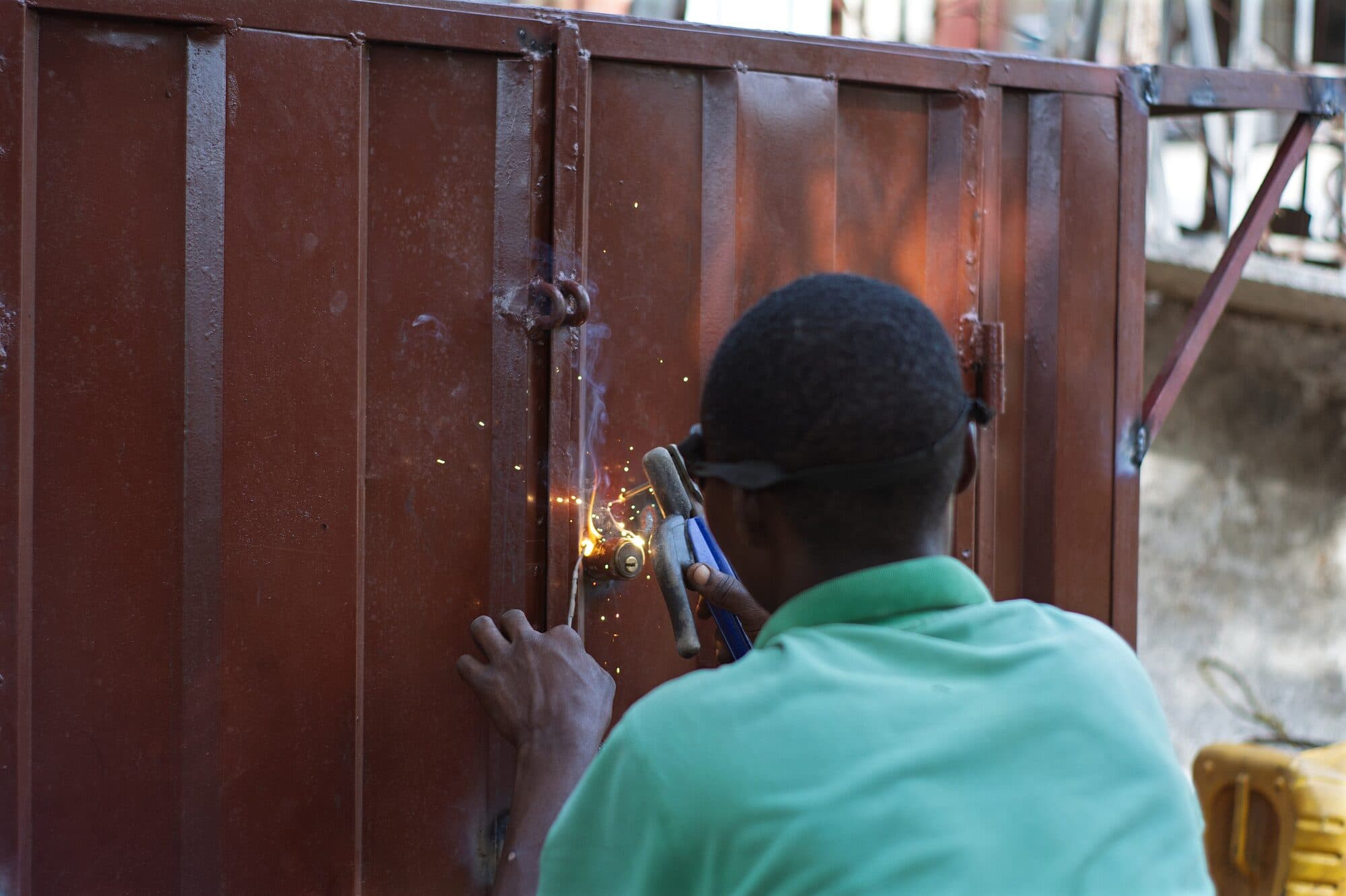
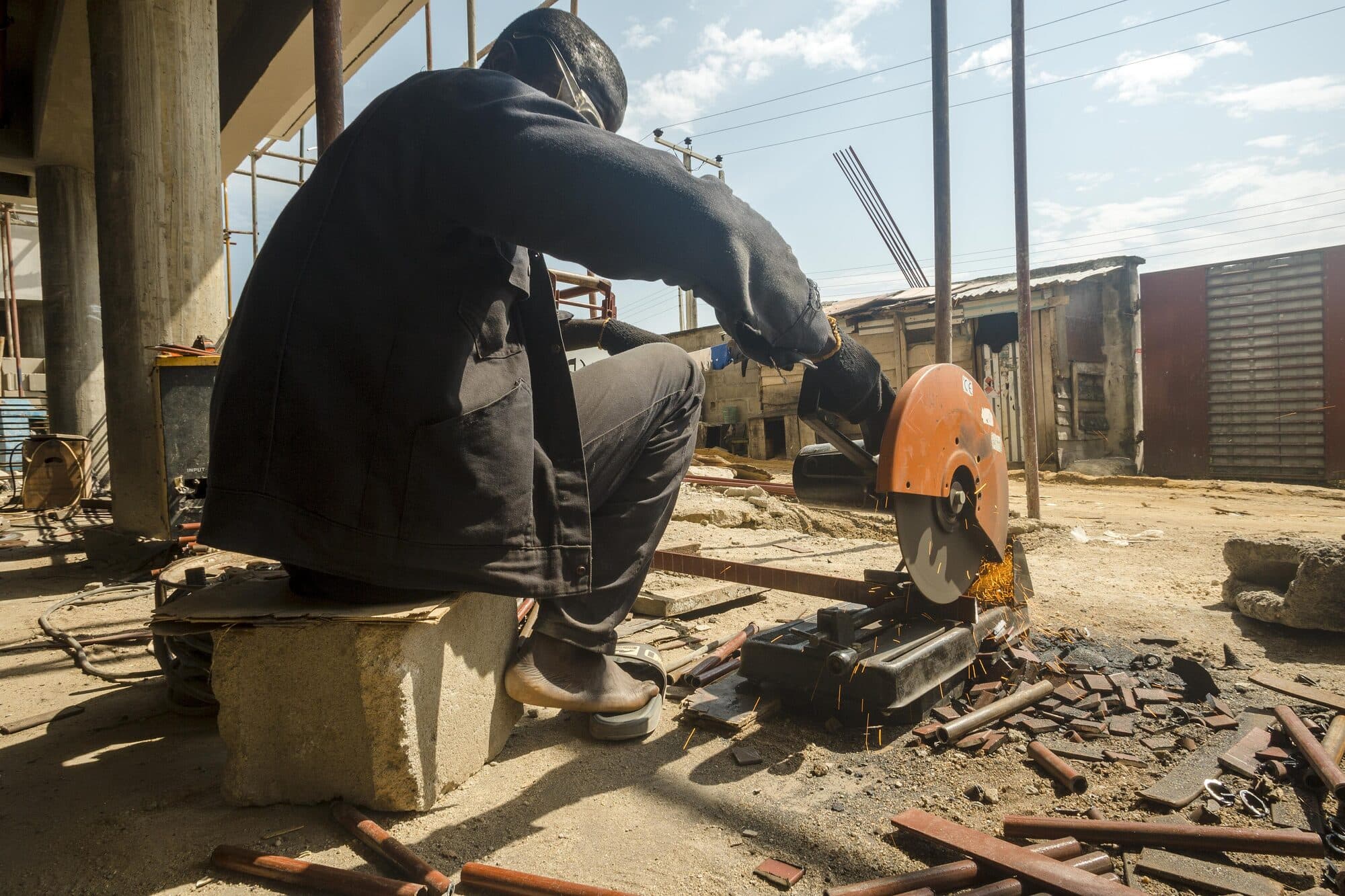
Stages 01 to 06 above cover everything we supply. Where the material is originated rather than sourced — where an operator goes out with a rig against a written brief — the programme runs to seven steps of its own, and they are worth stating separately because this is the half a buyer commissions rather than buys.
- 01
Brief
We collect against a written specification — yours where you have one, ours where you don't. Environments, action schema, angles, languages and volume are agreed before an operator leaves.
- 02
Clear
Contributor licence and appearance release signed before recording begins, payment made on the day, verbal consent captured on camera against the asset ID.
- 03
Capture
Locked, uniform settings across every operator: one resolution, one frame rate, one codec, no HDR, horizontal, synchronised second angle. Consistency beats peak quality.
- 04
Ingest
Two backups before the day ends. Assets renamed to a zero-padded ID scheme, technical metadata extracted automatically from the container.
- 05
Segment
Cut to the unit the buyer consumes. Failure and recovery sequences are preserved deliberately, never trimmed for tidiness.
- 06
Annotate
Task, intent, objects, hands-visible, step timings, failure events — and the reasoning behind a change of method, which is the layer that is genuinely scarce.
- 07
Deliver
Manifest, annotations, rights pack, data card and media in a documented folder structure. Proxies for review, masters on execution.
What we do not do
- Trim the failures.
- A tool slipping twice before the operator changes method is the scarcest thing in manipulation data. We keep it and annotate it.
- Accept undocumented archive.
- If chain of title cannot be reconstructed per asset, we decline the tranche rather than pass the liability to a buyer.
- Promise volume we cannot clear.
- Capacity is stated against operators trained and instruments signed, not against a spreadsheet.